


Riverside homeowners searching for professional dryer vent cleaning services trust Superior Carpet & Ducts to eliminate dangerous lint buildup, restore appliance efficiency, and protect families throughout Linn County’s Willamette River corridor. As a family-owned and operated business serving Oregon since 1975, we provide certified dryer vent cleaning throughout Riverside and the 97321 area backed by five decades of professional expertise, NADCA certification, and IICRC certification – licensed, insured, and bonded for your complete protection.
The U.S. Fire Administration (USFA) attributes roughly 2,900 residential fires each year in the United States to clothes dryers, with failure to clean identified as the leading contributing factor. On rural acreage that risk carries an extra dimension, because a fire at an unincorporated Riverside address is farther from a station than one inside Albany city limits.
Serving Riverside, Albany, North Albany, Millersburg, Tangent, Peoria, Corvallis, and all surrounding Linn County communities, we are your local dryer vent cleaning experts with locations throughout Oregon’s Willamette Valley.
Why Riverside Properties Face Elevated Dryer Fire Risk
Rural households produce a fundamentally different laundry load. Barn clothes, canvas work wear, denim, coveralls, shop rags, and outdoor gear shed far coarser and denser lint than an average urban wardrobe. Denser lint packs more tightly inside a vent run, which is why acreage properties around Riverside frequently need service on a shorter interval than the annual recommendation implies.
Volume compounds it. The National Oceanic and Atmospheric Administration (NOAA) documents that the Willamette Valley receives substantial annual precipitation concentrated between October and May. Line drying is not realistic through those months, so every load that would air dry in July goes through the machine instead. The National Fire Protection Association (NFPA) identifies failure to clean as the cause behind roughly a third of home dryer fires, more than any other single factor.
Then there is the housing itself. Older farmhouses along the Riverside Drive corridor frequently have laundry located wherever plumbing allowed decades ago, which produces long vent runs, multiple elbows, and terminations through a crawlspace or up through a roof. Long complicated runs collect lint faster and are harder to clear without professional equipment.
Response distance is the factor people overlook. Rural fire response times are inherently longer than urban ones. Prevention carries more weight when help is farther away.
The Hidden Dangers of Clogged Dryer Vents
Fire Hazard: Lint is highly combustible. The USFA reports that residential dryer fires cause approximately 5 deaths, 100 injuries, and $35 million in property damage annually in the United States.
Carbon Monoxide Exposure: Gas and propane dryers produce carbon monoxide that a functioning vent exhausts outdoors. The Centers for Disease Control and Prevention (CDC) warns that blocked venting can force combustion gases back into living space. Propane appliances are common on rural Linn County properties without natural gas service, which makes this worth taking seriously here.
Appliance Damage: Restricted airflow overheats heating elements, thermostats, and control boards. Replacing a dryer costs far more than maintaining the vent that serves it.
Trapped Moisture: A blocked vent leaves every load’s humidity inside the house. The EPA recommends keeping indoor relative humidity between 30 and 50 percent, and a laundry room fighting a restricted vent through a valley winter will not stay in that band.
Rodent and Bird Nesting: Uncapped or damaged exterior terminations on rural properties attract nesting, which produces sudden and complete blockages. We find this regularly on acreage.
Warning Signs Your Riverside Home Needs Service
The NFPA identifies specific indicators of dangerous accumulation:
Extended Drying Times: Loads needing a second or third cycle indicate restricted airflow.
Excessive Heat: A dryer exterior, laundry wall, or finished load that feels unusually hot signals trapped heat that should be leaving the building.
Burning Odors: Any burning smell means lint deposits are reaching dangerous temperatures. Stop using the dryer and schedule service before running another load.
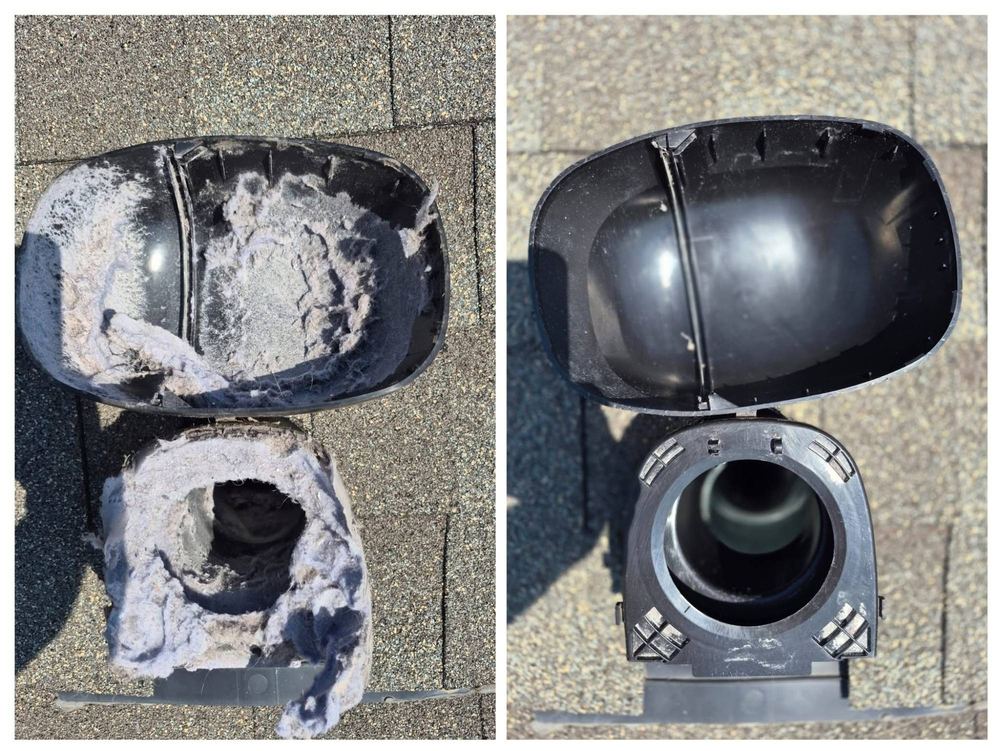
Visible Lint at the Exterior Vent: Accumulation around the outside hood indicates significant buildup in the run behind it.
A Vent Flap That Will Not Open: A damper that stays shut while the dryer runs means the system is not exhausting.
It Has Been Over a Year: The NFPA recommends annual professional cleaning. Riverside households running heavy farm and shop laundry often need service every six months.
Our Riverside Dryer Vent Cleaning Process
Complete System Inspection: We assess vent length, routing, material, and blockage severity before any cleaning begins.
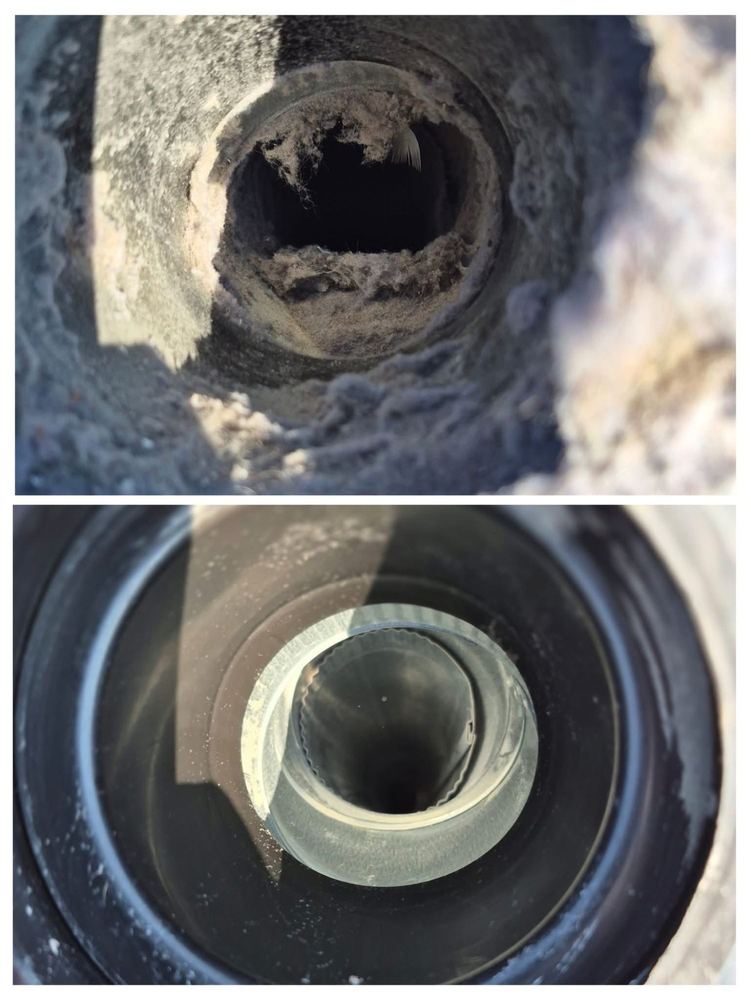
Professional Lint Removal: Rotary brush systems and high-powered vacuum equipment clear the entire run from dryer connection to exterior termination. Commercial equipment reaches sections consumer kits cannot.
Exterior Vent Inspection and Cleaning: We clear terminations of lint, debris, and nesting material, and flag missing or damaged caps.
Airflow Verification: We confirm restored airflow with professional measurement tools after cleaning.
Code Compliance Assessment: We evaluate the installation against current safety standards published by the International Code Council (ICC), flagging improper materials, excessive length, or crushed transition ducting. Older rural installations frequently need correcting.
Energy Efficiency Benefits for Riverside Homeowners
The U.S. Department of Energy notes that a clean, properly routed vent lets a dryer finish loads in a single cycle rather than forcing repeated runs. For a Riverside household running heavy laundry year round on rural electric or propane service, cutting cycle times shows up directly on the bill and extends appliance life.
Why Riverside Families Choose Superior Carpet & Ducts
50 Years of Oregon Expertise: As a family-owned and operated business serving Oregon since 1975, we understand how rural Linn County laundry loads and older farmhouse plumbing layouts shape vent risk.
We Serve Rural Addresses: Unincorporated properties off Riverside Drive are part of our regular service area, not an exception we make.
NADCA and IICRC Certification: Our technicians maintain current NADCA and IICRC certifications.
Licensed, Insured, and Bonded: Complete protection on every service call.
Long and Difficult Vent Runs: Interior laundry rooms, crawlspace routing, and roof terminations need equipment and experience a general handyman visit does not bring.
Comprehensive Home Services: Beyond dryer vent cleaning in Riverside, we provide air duct cleaning, carpet cleaning, tile and grout cleaning, upholstery cleaning, area rug cleaning, wood floor cleaning, and commercial janitorial services.
Serving Riverside and the Surrounding 97321 Area
Riverside Areas: Riverside Drive SW corridor, Willamette River frontage properties, rural acreage and hobby farms, and unincorporated Linn County addresses sharing the 97321 ZIP code
Surrounding Communities: Albany, North Albany, Millersburg, Tangent, Peoria, Corvallis, Adair Village, and all surrounding Linn County locations
Frequently Asked Questions About Dryer Vent Cleaning in Riverside
How often should Riverside homes have dryer vents professionally cleaned?
The NFPA recommends annual professional cleaning. Households washing barn clothes, coveralls, canvas, and shop laundry generally benefit from service every six months, since those fabrics shed considerably more lint per load.
Does having a propane dryer change anything?
It raises the stakes on venting. Propane and gas dryers produce carbon monoxide as a combustion byproduct, and the CDC warns that blocked venting can push combustion gases back into living space. On rural properties without natural gas service, propane appliances are common enough that this is worth checking.
How long does the service take?
Most homes take 45 to 90 minutes. Long farmhouse runs with multiple elbows or roof terminations take longer than a short exterior-wall vent.
Something is nesting in my exterior vent. Can you handle that?
Yes. Bird and rodent nesting in uncapped rural terminations is a regular find. We clear it, clean the run, and flag whether the cap needs replacing.
Protect Your Riverside Home and Family Today
Do not risk your property on a preventable dryer fire, particularly where fire response has farther to travel. Contact Superior Carpet & Ducts today – the trusted choice for professional dryer vent cleaning throughout Riverside and the 97321 area, backed by 50 years of Oregon family ownership.
Call (541) 745-5278 or request a free quote to schedule your Riverside dryer vent cleaning service. Licensed, insured, bonded, and ready to eliminate dryer fire risk throughout your Linn County property.
Contact Superior Carpet and Ducts in Riverside
Serving Riverside seven days a week, 6:00 AM to 8:30 PM.
Get a Free Quote

